

Ashtakvarga System Explained: Reading Sarvashtakvarga the Right Way
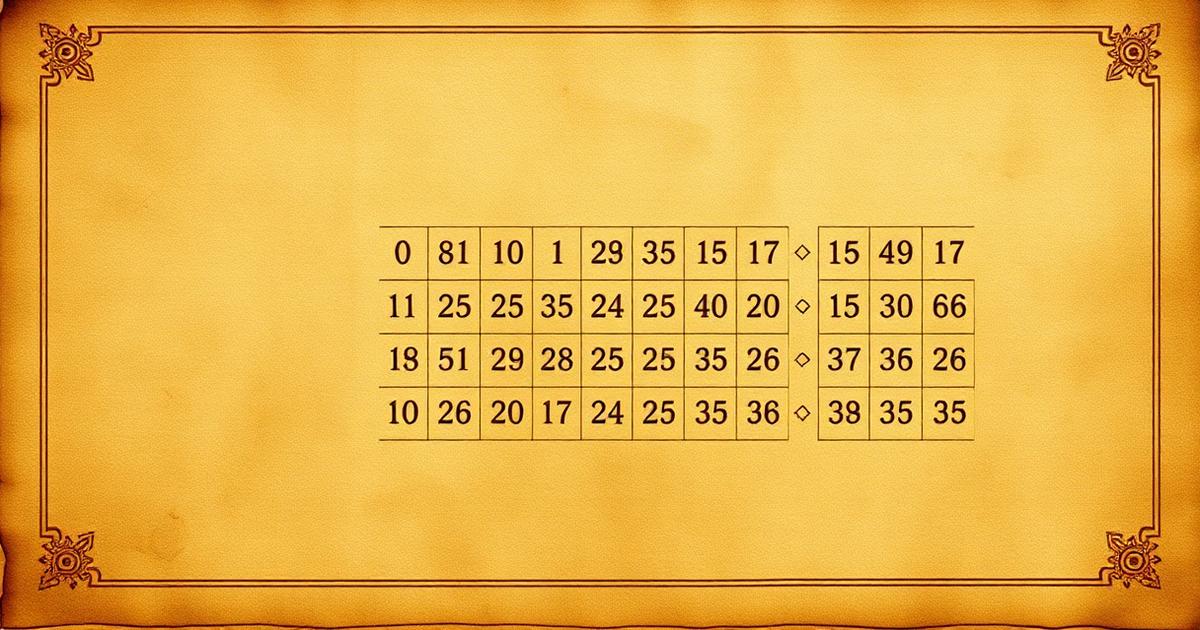
Sarvashtakvarga is the total bindu count, ranging from 0 to 56, for each house, combining all seven planets' individual Ashtakvarga tables along with the Lagna. A higher bindu count marks a stronger house, and this system is used practically to time transits, since planets transiting high-bindu houses or signs tend to produce more favourable results.
Try the tool
Free Kundli Online, free preview, no signup needed.
Most astrologers skip Ashtakvarga because the arithmetic looks scary on the first page. It is not scary. It is a lookup table plus addition. Parashara dedicated entire chapters to it because it is the single sharpest timing tool the Vedic tradition ever produced, and yet most quick chart readings never open this section at all.
What Ashtakvarga is
For each of the seven planets (Sun through Saturn), a classical table tells you which houses that planet earns a bindu (point) from, counted from each of the seven planets and the Lagna. Adding up all bindus per house across all seven planets' tables gives Sarvashtakvarga, ranging from 0 to 56 per house.
How to read Sarvashtakvarga
| Bindu count | Reading |
|---|---|
| Below 25 | Weak house, needs support from other yogas to deliver |
| 25 to 30 | Average, delivers moderate, mixed results |
| Above 30 | Strong, delivers its significations reliably |
| 35 and above | Exceptionally strong, results come almost effortlessly |
Transit prediction
When a planet transits a house with high bindus, results are favourable. The same planet through a low-bindu house gives weak or even negative results, even during its own Mahadasha. This is why two people with the identical Saturn transit by sign can have completely different experiences during it: their Sarvashtakvarga in that house differs because their whole chart differs.
Practical application, house by house
For career, check the Sarvashtakvarga of the 10th house. For marriage, the 7th house. For wealth, the 2nd and 11th houses. For children, the 5th house. For health, the 6th and 8th houses (lower is actually better here, since these are difficulty houses). Then wait for a Jupiter or Saturn transit through those houses when bindus are high, that is your timing window for major decisions.
Calculating Sarvashtakvarga without the headache
You need the Prastharashtakvarga tables for each of the seven planets, printed in any BPHS edition or generated instantly by a good chart engine. For each planet, mark a bindu in the houses the table awards, counted from every planet and from the Lagna in turn. Adding all seven planets' contributions gives one number per house, and the twelve numbers always total 337. That fixed total is your error check, if your columns do not add to 337, the chart has a mistake somewhere. You can generate an accurate base chart first in the free Kundli tool before working through the bindu tables by hand or software.
Bhinnashtakvarga, the finer layer
Sarvashtakvarga shows which houses are strong overall. Bhinnashtakvarga (a single planet's own bindus, 0 to 8 per house) shows which planet works where. Saturn with 5 or more bindus in your 10th house means Saturn transits through that house build career, even during Sade Sati. The same Saturn with 1 or 2 bindus in the 4th house means its transit there strains home and health. This is the reason honest astrologers refuse to give one blanket Saturn prediction to everyone born the same year. Read the Sade Sati survival guide alongside your own Bhinnashtakvarga rather than a generic forecast.
Kakshya Vibhaga, timing within a transit
Each sign is split into eight Kakshyas of 3 degrees 45 minutes, each ruled by a planet in a fixed order: Saturn, Jupiter, Mars, Sun, Venus, Mercury, Moon, Lagna. As a transiting planet crosses each Kakshya, it delivers benefit only if the ruling planet of that Kakshya has given it a bindu in that house. This is how a roughly 2.5-year Saturn transit produces three good months and two brutal ones instead of a uniform experience, and it is the single most practical Ashtakvarga tool for month-level planning, far more useful than knowing just the sign-level transit.
Using bindus with dasha, a simple workflow
Start with your running Mahadasha and Antardasha to know the theme, check it in the Vimshottari Dasha calculator. Check the Sarvashtakvarga of the house those lords rule and occupy, that tells you whether the theme will be productive or heavy. Then look at where Jupiter and Saturn are transiting and the bindu count of those houses to pick the actual months, using the Saturn transit predictions and Jupiter transit guide as reference. Decisions taken when dasha, high bindus and a benefic transit agree have a visibly better hit rate than decisions taken on dasha alone.
Common mistakes people make with Ashtakvarga
- Reading only Sarvashtakvarga and ignoring Bhinnashtakvarga, which misses which specific planet is doing the delivering.
- Judging a house purely on bindu count while ignoring an outright Raj Yog or Dhan Yog sitting in it, the two systems should be read together, not in isolation. See our Raj Yog guide and Dhan Yog guide.
- Treating a low-bindu house as permanently cursed. It simply means that life area needs more deliberate effort and better timing, not that it is closed off.
- Using an inaccurate birth time. Since houses shift with the Lagna, a wrong birth time gives wrong bindus for every single house.
Remedies and next steps
- Strengthen the planet with the lowest individual bindu count through its standard remedy, mantra, charity, or in some cases a verified gemstone from our gemstone guide.
- During low-bindu transits, avoid major decisions in that life area if you can help it.
- During high-bindu transits, take bold action, this is when effort compounds fastest.
- Ashtakvarga is not a curse, it is a scheduling tool built on your own chart's arithmetic.
- Combine with Vimshottari Dasha for maximum accuracy, neither system alone tells the full story.
What is Sarvashtakvarga and why every reading needs it
If you search "sarvashtakvarga" you will mostly find dry definitions. In plain terms it is the master bindu count, 0 to 56 per house, that tells you whether a house is strong enough to deliver on its promises when a planet transits it or when a dasha lord activates it. I check it before every timing question a client asks me, because a beautifully placed planet in a low-bindu house still under-delivers.
A real example
Two clients both had Jupiter transiting their 7th house in the same month, one got engaged within weeks, the other saw no movement at all. The difference was Sarvashtakvarga: the first chart's 7th house carried 32 bindus, the second only 19. Same transit, same house, very different delivery, because the house itself was not equally "loaded" in each chart. Check your own chart's bindu counts in the free Kundli tool before reading too much into any single transit.
What this can't tell you
Ashtakvarga tells you how much a house can deliver, not exactly when or through which event. It still needs to be read alongside dasha timing, it is not a standalone prediction engine.
Related reading
Founder & Lead Vedic Astrologer, AstroFuture AI · Reviewed 5 October 2026
Aashish has been studying Vedic astrology, KP paddhati and Chaldean numerology for over 12 years. He founded AstroFuture AI to make classical Jyotish accessible without the roughly $24 consultation fee. Every article on this blog is written or reviewed by him personally.
Want your own chart or numerology report?
Frequently Asked Questions
Free tools for this topic
Apply what you just read to your own chart, no payment needed.
Related articles
Birth Chart Reading Guide: The Order That Actually Works
8 min read
Saturn Transit 2026 Predictions, Rashi by Rashi
8 min read
Raj Yog in Kundli: Real Combinations and How to Check Yours
9 min read
Gajakesari Yoga in Kundli: Real Meaning, Rarity and Activation
6 min read
Neech Bhang Raj Yoga: The Real Rules, Not the Internet Version
7 min read
Samudrik Shastra: Moles, Marks & Body Signs by Planet and House
12 min read