

Janmashtami 2027: Date, Nishita Muhurat, Vrat Vidhi and Samagri
Janmashtami 2027 falls on Wednesday, 25 August 2027, celebrating Lord Krishna's birth, with the main Nishita Kaal puja happening just after midnight into 26 August. The day includes a full vrat vidhi, a specific samagri list, and Dahi Handi celebrations, and it lands close to Raksha Bandhan on the calendar that year.
Book online
Book Pooja Online, talk to our team and schedule your pooja.
Janmashtami 2027 falls on Wednesday, 25 August 2027. Krishna ji was born at midnight under Rohini Nakshatra, so the real Nishita Puja happens in the short window straddling midnight itself, not any time during the evening. Here is the full date, the Nishita muhurat, the vrat vidhi, and the samagri list, in the same order I would walk a family through it.
Janmashtami 2027 date and tithi
Bhadrapad Krishna Ashtami begins on the afternoon of 25 August 2027 and continues into the afternoon of 26 August. Both the Smart Sampraday (household worship) and the Vaishnav Sampraday (temple based) will mark 25 August as the main day, because that is when Ashtami is active at midnight. Check your local Panchang for whether Rohini Nakshatra also overlaps the midnight window in your city, since that overlap is what makes a Janmashtami year especially auspicious.
Nishita Puja shubh muhurat
The Nishita Kaal Puja muhurat runs approximately from 12:00 AM to 12:45 AM, technically in the very early hours of 26 August though everyone still calls it "Janmashtami night". This 45 minute window is treated as the closest match to Krishna's actual birth moment. If a full midnight puja is not practical for your household, an evening Sandhya puja between 7:00 PM and 9:00 PM on 25 August is also considered auspicious. Parana, the breaking of the fast, should wait until after roughly 6:30 AM on 26 August, once both the Ashtami tithi and Rohini Nakshatra have completed.
| Window | Approx time | Purpose |
|---|---|---|
| Sandhya Puja | 7:00 PM to 9:00 PM, 25 Aug | Evening puja for households that cannot stay up |
| Nishita Kaal Puja | 12:00 AM to 12:45 AM | Main puja, matches Krishna's birth moment |
| Parana (fast breaking) | After 6:30 AM, 26 Aug | Only after Ashtami and Rohini both end |
Vrat vidhi, step by step
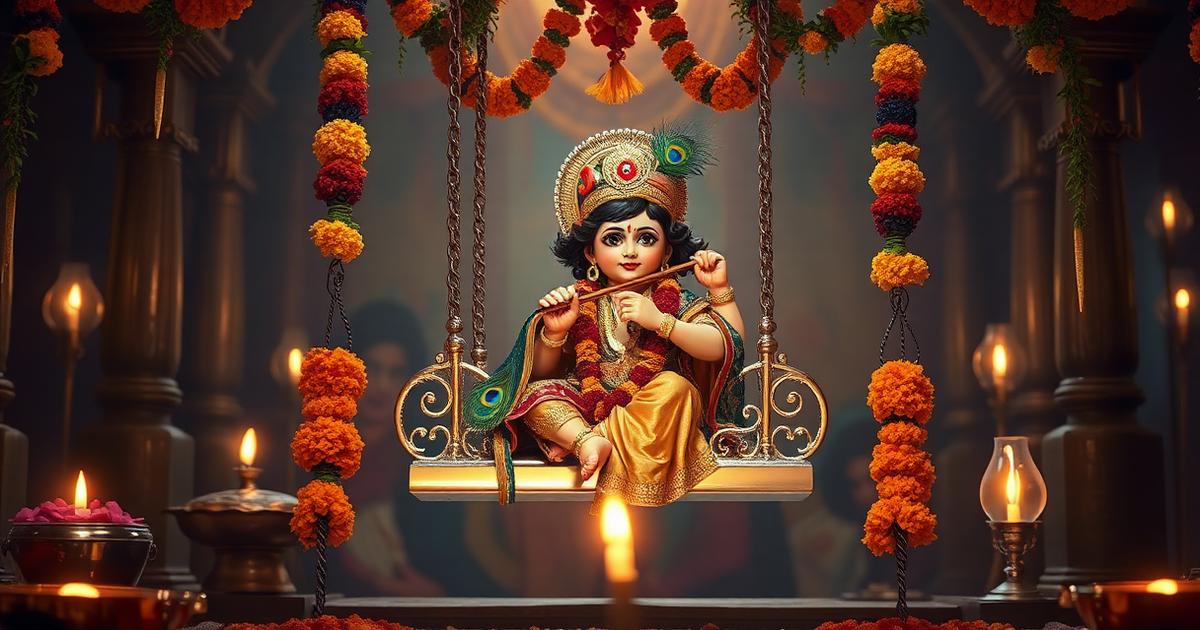
On the night before, 25 August, eat something light so the body is ready for a long fast. On the day itself, bathe, wear clean silk or cotton clothes, and take a Sankalpa for either a Nirjala (waterless) or Phalahar (fruits only) vrat, depending on your own health and capacity. Spend the day in Krishna smaran, reading a chapter of the Bhagavad Gita or the Vishnu Sahasranama. In the evening, decorate a small mandir or jhoola for Krishna at home. At Nishita Kaal, do a panchamrit abhishek of the Krishna murti, dress the idol in new clothes, rock the jhoola, perform aarti, and offer naivedya. Break the fast the next morning, only once Ashtami and Rohini have both passed.
Samagri list
A Bal Krishna murti (silver or brass, in the Laddu Gopal form is common), a small jhoola with decorations like peacock feathers, flowers and chunri, panchamrit made of milk, curd, honey, ghee and sugar, Gangajal, tulsi patra which is non negotiable for any Krishna puja, yellow flowers, makhan (butter), mishri, dhoop, agarbatti, a ghee lamp, yellow cloth for the idol, a mor pankh, a small bansuri, and naivedya of makhan mishri, dhania panjiri, kheer, and seasonal fruits.
Fasting rules
There are two accepted forms. Nirjala means no water at all and is only meant for people in good health. Phalahar allows fruits, milk, sabudana, and singhada flour, and is the safer option for most people, including anyone with a health condition. Grain products, especially wheat and rice, are avoided in both forms, along with onion and garlic. If salt is used at all, it should be sendha namak. The fast runs the full day from the morning of 25 August to the morning of 26 August, and parana only happens once both Ashtami tithi and Rohini Nakshatra are fully over.
Dahi Handi tradition
The day after, 26 August, is when Maharashtra celebrates Dahi Handi, recreating young Krishna's playful butter theft. Govinda teams form human pyramids to break a handi filled with curd hung high above the street. In recent years the Bombay High Court has put limits on pyramid height and the age of participants for safety reasons. A home version works just as well, filling a small clay handi with butter and letting children take turns breaking it.
Regional variations
Mathura and Vrindavan see the biggest celebrations, and the midnight aarti at Banke Bihari mandir is genuinely something else if you can attend once in your life. Dwarka carries the main celebration in Gujarat. In South India, the day is called Krishna Jayanti, and many homes draw small rice-flour footprints from the main door to the puja room, symbolising baby Krishna walking in. Maharashtra's focus stays on Dahi Handi, while in Bengal the evening is built around bhajans and katha sessions.
Common mistakes
- Doing Dahi Handi or any "butter theft" celebration before the Nishita Puja. Krishna has to be born first, in the ritual sequence.
- Skipping tulsi patra. A Krishna puja without tulsi is considered incomplete.
- Offering bhog that contains onion or garlic.
- Breaking the vrat before Rohini Nakshatra has actually ended, which is believed to reduce the merit of the fast.
Remedies and next steps
- If you are bringing home a Laddu Gopal murti for the first time, the Nishita Kaal window is the ideal time to do the sthapana.
- Let everyone in the family take a turn rocking Krishna's jhoola at least once.
- Keep the household as quiet as possible during the fast, it deepens the smaran considerably.
- Always include makhan mishri in the naivedya, it is Krishna's classic favourite offering.
- Share charnamrit with the whole family as prasad after the puja.
- Use the ghee from the next day's Dahi Handi in cooking rather than throwing it away.
Janmashtami sits close to several other festival dates worth planning around. You can check your own chart's compatibility with fasting and puja days using the free Kundli tool, and if you have a specific question about your Moon sign or Rohini Nakshatra placement, the AI astrologer chat can walk through it with you.
Janmashtami 2027 kab hai and what is the Nishita muhurat?
To restate the two most searched facts plainly: Janmashtami 2027 falls on Wednesday, 25 August 2027, and the Nishita muhurat, the exact window matching Krishna's midnight birth, runs from roughly 12:00 AM to 12:45 AM heading into 26 August. If your Panchang app shows a slightly different date, it is almost always because of local sunrise-based tithi timing, not an error, check the tithi start and end times directly rather than trusting a single-line date.
Rakhi and Janmashtami 2027, how close are the two festivals?
Raksha Bandhan 2027 falls before Janmashtami this year, so many families end up planning both festivals inside the same short window. If you are trying to sequence pujas, muhurat shopping and travel around both, check the exact Raksha Bandhan date first in the linked guide below, then use this page for the Janmashtami vrat and Nishita Puja plan.
A real example
A family once performed the Nishita Puja an hour before midnight because that suited their guests' schedule, missing the actual Rohini-Ashtami overlap that defines the Nishita Kaal that year. The ritual still had devotional value, but the specific astrological alignment commemorated by the midnight timing was not present. If you want the puja done at the exact Nishita window for your city, you can book a Vedic astrologer online in advance.
What this can't tell you
A national muhurat table cannot adjust for your exact city's midnight and Nakshatra timing to the minute, always cross-check the local Panchang for your specific location before fixing the Nishita Puja time.
Related reading
Founder & Lead Vedic Astrologer, AstroFuture AI · Reviewed 10 October 2026
Aashish has been studying Vedic astrology, KP paddhati and Chaldean numerology for over 12 years. He founded AstroFuture AI to make classical Jyotish accessible without the roughly $24 consultation fee. Every article on this blog is written or reviewed by him personally.
Want your own chart or numerology report?
Frequently Asked Questions
Free tools for this topic
Apply what you just read to your own chart, no payment needed.
Related articles
Raksha Bandhan 2027: Muhurat, Date, Wishes and Images
11 min read
Hariyali Teej 2027: Date, Muhurat and Vidhi for Punjab & Haryana
7 min read
Daily Panchang Guide: Tithi, Nakshatra, Rahu Kaal and Choghadiya
9 min read
Amavasya 2026: Full Date List, Puja Vidhi and Fasting Rules
7 min read
Griha Pravesh Muhurat 2026: Dates, Vidhi and Cost
8 min read
Kaal Sarp Dosh Puja at Trimbakeshwar, the Honest Guide
8 min read