

Hariyali Teej 2027: Date, Muhurat and Vidhi for Punjab & Haryana
Hariyali Teej 2027 falls on Thursday, 5 August, observed the same date across Punjab, Haryana and the rest of North India, since it follows the Shravan Shukla Tritiya tithi. The day involves a full vrat vidhi for married and unmarried women, worshipping Goddess Parvati and Lord Shiva using a specific samagri list for marital happiness and wellbeing.
Book online
Book Pooja Online, talk to our team and schedule your pooja.
Hariyali Teej 2027 falls on Thursday, 5 August 2027. This is the biggest women's vrat of the Shravan month, kept by married women for their husband's long life and by unmarried women praying for a good life partner. Green sarees, a Nirjala fast, and a Shiv Parvati puja are the core of the day. Here is the complete vidhi, muhurat and samagri.
Hariyali Teej 2027 date and tithi
Hariyali Teej is observed on Shravan Shukla Tritiya, which falls on 5 August 2027, a Thursday. The vrat and puja are observed on the day Tritiya is active during the daytime, which lines up with the strongest Shukla Paksha window of the Shravan month, the same tithi traditionally linked to Parvati ji's tapasya for Shiv ji.
Shubh muhurat
Brahma Muhurat, between 4:30 AM and 6:00 AM, is ideal for the Sankalpa and morning bath. The main puja window runs through the morning hours. The classical Teej puja time, however, is Pradosh Kaal, the early evening window after sunset. The fast is broken after moonrise if you are observing a Nirjala vrat, water being the very first thing taken. Exact minutes shift by city, so confirm with your local Panchang.
| Window | Approx time | Purpose |
|---|---|---|
| Brahma Muhurat | 4:30 AM to 6:00 AM | Sankalpa and morning bath |
| Morning puja | 7:00 AM to 11:00 AM | Optional daytime puja |
| Pradosh Kaal puja | Early evening, after sunset | Main classical Teej puja |
| Chandroday | After moonrise | Fast breaking, water first |
Vrat vidhi, step by step
On the night before, 4 August, eat a light satvik meal and sleep early. On 5 August, bathe, apply mehendi on the hands, wear a green or red saree with full solah shringar, and take a Sankalpa for the Nirjala vrat. For the puja, either make small clay Shiv Parvati murtis or bring readymade ones and place them on a chowki. Do Ganesh puja, Kalasha puja, a panchamrit abhishek of Shiv Parvati, offer sindoor to Parvati ji and bilva patra to Shiv ji, and read the Teej katha. Stay Nirjala through the day, then offer arghya to the moon at Chandroday before breaking the fast.
Samagri list
Clay Shiv Parvati murtis, preferably freshly made, a green or red saree, solah shringar items (sindoor, bindi, kajal, mehendi, bangles, mangalsutra, payal, bichuwa, gajra), a Kalasha, Gangajal, mango leaves, a coconut, panchamrit made of milk, curd, honey, ghee and sugar, bilva patra, dhatura, aak flowers, dhoop, agarbatti, a ghee lamp, red and green flowers, fruit like banana, apple and coconut, ghewar as the traditional sweet, and a copy of the Teej katha to read from.
Katha and symbolism
According to the Purana, Parvati ji performed tapasya across 108 births to have Shiv ji as her husband. She finally succeeded on this same Shravan Shukla Tritiya, when Shiv ji accepted her. That is why the vrat is kept for finding the right life partner, strengthening an existing marriage, and praying for the husband's long life. Green also ties into the season, marking the arrival of the Shravan rains and Parvati's own fertility symbolism.
Nirjala rules and safety
In the classical Nirjala vrat, no water is taken from the morning bath until moonrise. If you have a health condition such as high blood pressure, diabetes, pregnancy, or you are breastfeeding, a Phalahar vrat with fruits and milk is the sensible substitute. The point of the fast is the sankalpa and the devotion behind it, not pushing your body into a health crisis. After Chandroday, take water first, then fruit, and only then the regular meal.
Teej 2027 date in Punjab and Haryana
Hariyali Teej 2027 in Punjab and Teej 2027 in Haryana both fall on the same day as everywhere else in North India, Thursday, 5 August 2027, since the tithi is the same across the region. What differs is how it is celebrated: in Punjab the festival is often called Teeyan, with community singing, giddha and swings put up in courtyards, while in Haryana the day stays closer to the classical vrat, with a Shiv Parvati puja, green attire and the Teej katha read at home or in a group of women from the same street or family. If you are looking specifically for "teej 2027 date in punjab" or "teej 2027 haryana", 5 August is the date to mark, and the puja muhurat table above applies in both states.
Regional variations
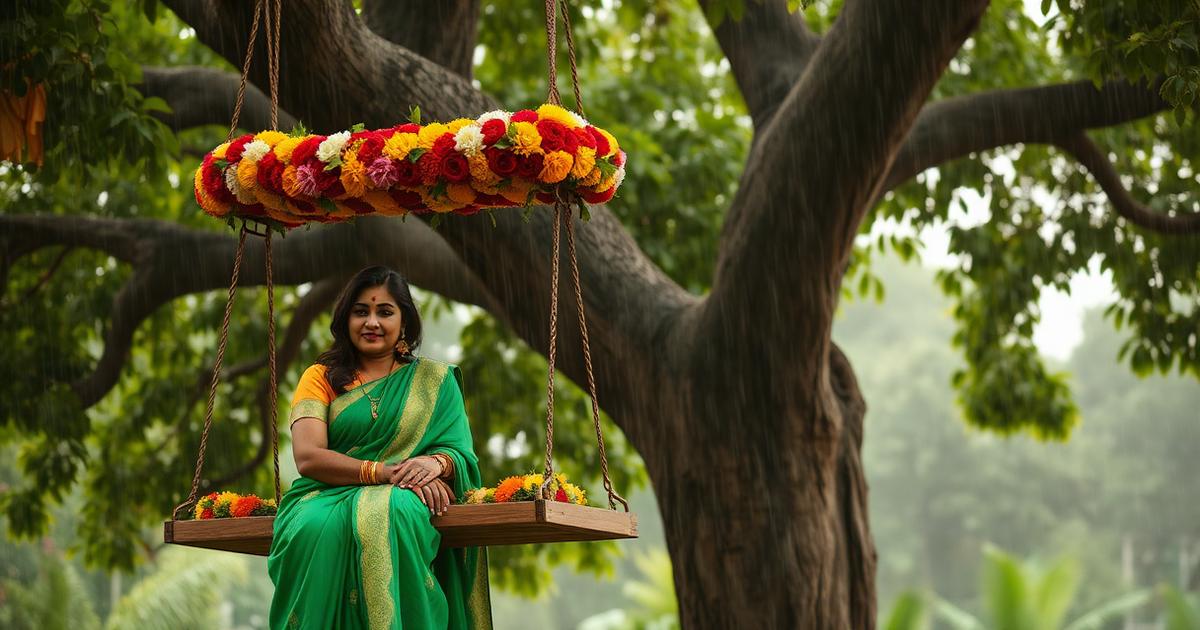
Rajasthan and Haryana celebrate Hariyali Teej on the largest scale, with the Teej procession in Jaipur being especially well known. Uttar Pradesh and Bihar centre the day around ghewar and jhoolas hung from large trees, with women gathering in groups to hear the katha. In Punjab, the festival is called Teeyan and involves community dance. In Nepal and Uttarakhand, married women often travel to their maternal home to observe the vrat.
Wishes and messages
If you want to send a short Teej message to family or friends, keep it simple and warm rather than overly poetic: "Hariyali Teej ki hardik shubhkamnayein, aapka jeevan hara bhara aur khushiyon se bhara rahe" works well, or in English, "Wishing you a joyful Hariyali Teej, may your bond grow stronger with every monsoon." A short message sent early in the morning, before the fast begins, is a nice touch that most families appreciate.
Common mistakes
- Wearing black. Only green or red is worn on this day.
- Treating "no water" as the whole vrat. The mind should also stay calm and away from arguments.
- Using plastic flowers in the puja instead of fresh ones.
- Skipping the katha. Reading or listening to it is considered essential, hunger alone does not complete the vrat.
Remedies and next steps
- Unmarried women can wear green bangles through the day, believed to help in finding a good life partner sooner.
- Married women can take blessings from their mother-in-law after the puja, sindoor in hand.
- Immerse the clay Shiv Parvati murtis in clean water the next day.
- Ghewar should be shared with both sasural and maayke, it is the signature sweet of this festival.
- Sit with your husband for a few minutes of shared Shiv Parvati smaran, this is really the emotional core of the vrat.
If you are trying to time this vrat, a wedding, or any major family decision around your own chart, it helps to check your placements first in the free Kundli tool, and for anything specific about marriage timing or a manglik concern, the Manglik Dosha guide is worth a read.
A real example
A newly married woman unsure whether she needed to keep a fully Nirjala (no water) fast asked her mother-in-law, who insisted it was mandatory. Classical practice actually allows a Phalahari (fruits and milk) version for health reasons, pregnancy, or a first year of marriage, the Nirjala form is a stricter personal choice, not an obligation. Confirm the Teej muhurat for your city before the puja, and if you want a Vedic astrologer to guide the sankalp, you can book one online.
What this can't tell you
No article can tell you whether your specific health condition makes a Nirjala fast safe, that is a medical call, not an astrological one, so check with a doctor if you have any condition that affects fasting.
Related reading
Founder & Lead Vedic Astrologer, AstroFuture AI · Reviewed 10 October 2026
Aashish has been studying Vedic astrology, KP paddhati and Chaldean numerology for over 12 years. He founded AstroFuture AI to make classical Jyotish accessible without the roughly $24 consultation fee. Every article on this blog is written or reviewed by him personally.
Want your own chart or numerology report?
Frequently Asked Questions
Free tools for this topic
Apply what you just read to your own chart, no payment needed.
Related articles
Marriage Matching (Kundli) Beyond 36 Gunas: What Decides a Match
11 min read
Mangal Dosh Nivaran Puja: Real Cost, Vidhi & Best Temples
7 min read
Marriage Muhurat 2026: Best Wedding Dates
10 min read
Janmashtami 2027: Date, Nishita Muhurat, Vrat Vidhi and Samagri
7 min read
Amavasya 2026: Full Date List, Puja Vidhi and Fasting Rules
7 min read
Griha Pravesh Muhurat 2026: Dates, Vidhi and Cost
8 min read